New South Wales
November 4th 2026 - Garvan Institute of Medical Research, Sydney NSW
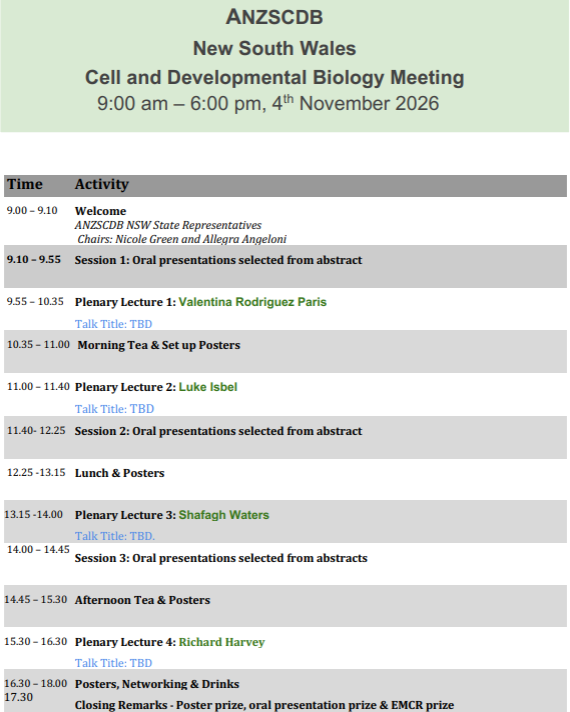
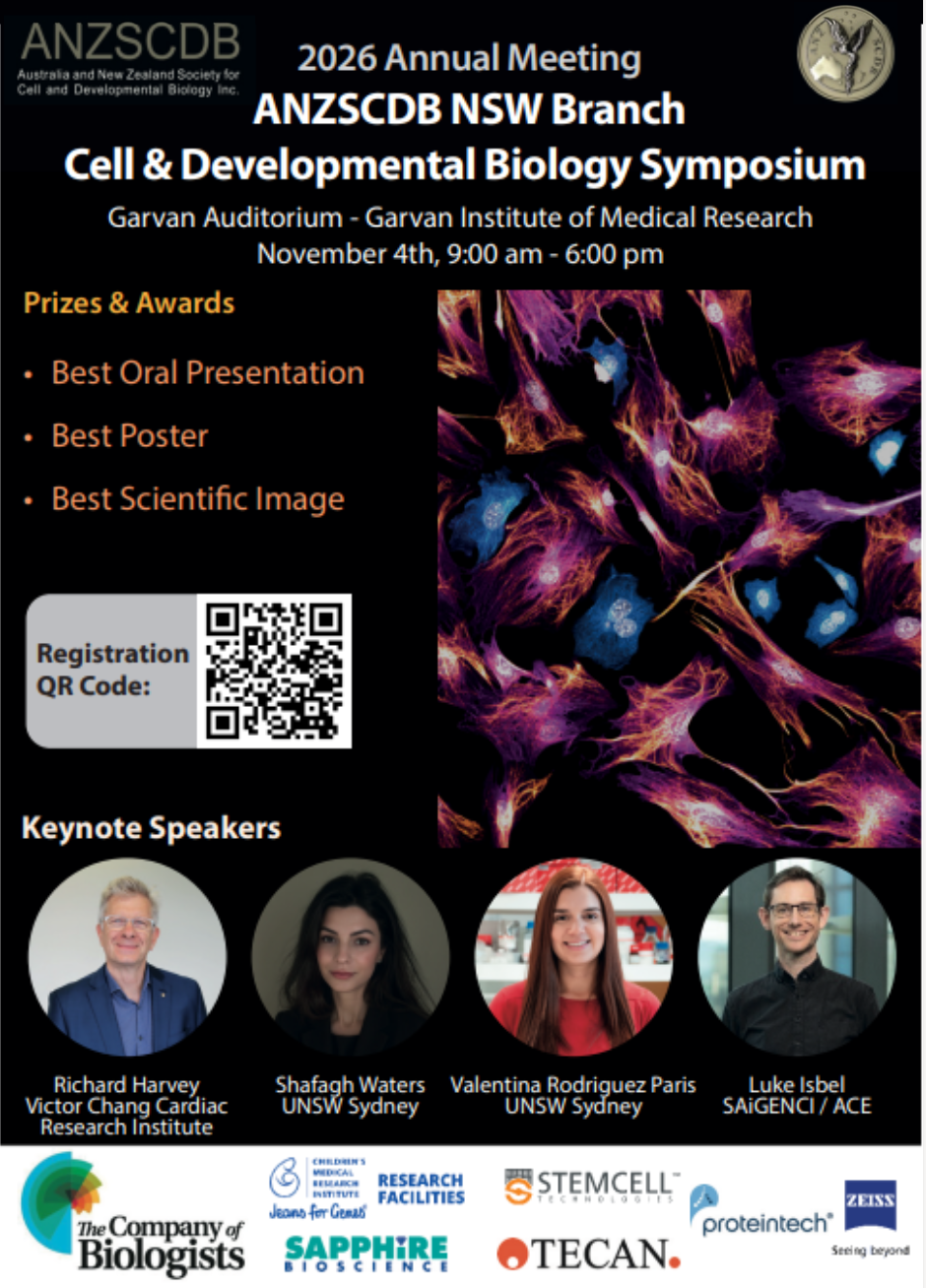
Join us for the 2026 NSW ANZSCDB Symposium on the 4th of November, 2026 at the Garvan Institute of Medical Research! Plenary talks will be presented by Prof. Richard Harvey, A/Prof. Shafagh Waters, Dr. Luke Isbel and Dr. Valentina Rodriguez Paris. Keep an eye out for registration details coming soon!
2025
November 5th 2025 - Garvan Institute of Medical Research, Sydney NSW
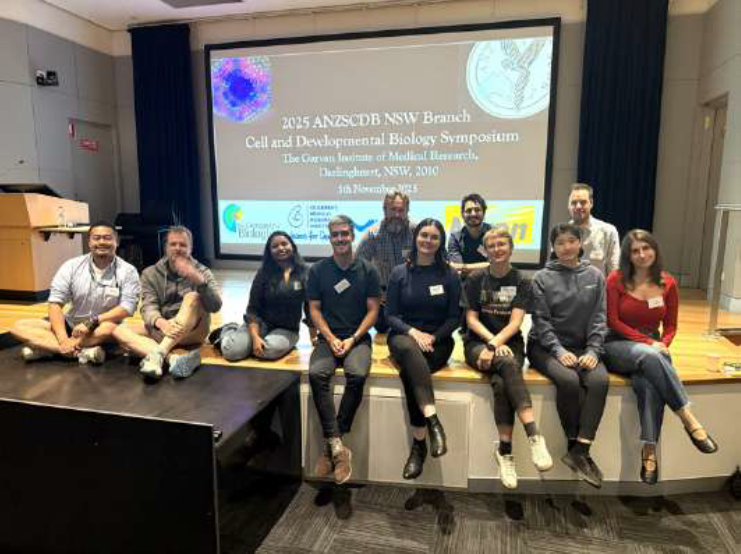
The New South Wales (NSW) branch of the Australia and New Zealand Society for Cell and Developmental Biology (ANZSCDB) held its annual symposium on the 5th of November at the Garvan Insitute for Medical Research in Sydney, NSW. Our event attracted 126 attendees from 15 universities and hospital affiliated medical research institutes in NSW, as well as from Federal Government research agencies, and 3 out of state or international attendees. Our symposium attracted a highly diverse range of attendees. 59% of attendees identified as female, 40% male, and 1% non-binary. 65% were PhD students or early-mid career researchers, and 85% were not ANZSCDB members, showing a high level of interest in our event from emerging researchers beyond our society.
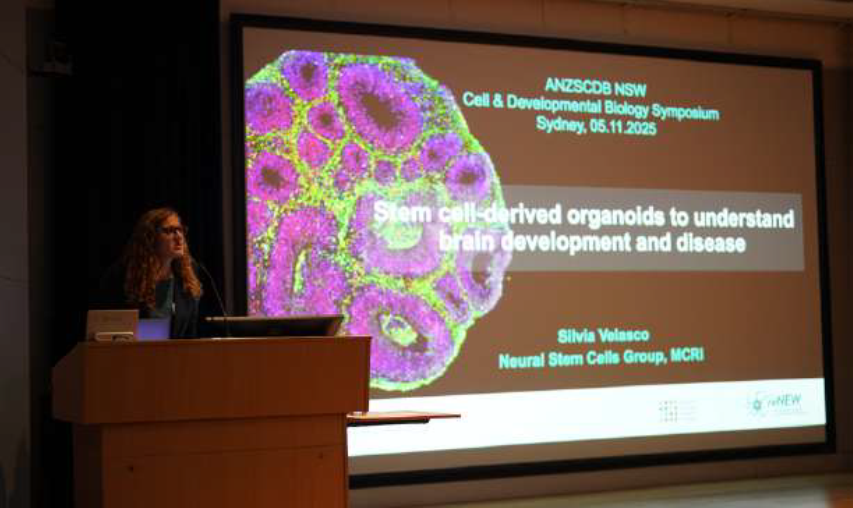
Our symposium had an exciting range of speakers that captured a wide array of cell and developmental biology projects. The invited speakers were Dr Dougall Norris (Postdoctoral Fellow, UNSW, NSW), Professor Kate Quinlan (UNSW, NSW), Associate Professor Silvia Velasco (Murdoch Children’s Research Ins1tute, Victoria), and Professor Ryan Lister (University of Western Australia, Perth). Dr Norris spoke about his work identifying novel SCAP/SREB inhibitors as anti-cancer agents. Professor Quinlan spoke about her lab’s work on an interesting class of fat- beige fat- and how its complex regulation by eosinophils. A/Prof Velasco provided a fascinating run-down of her lab’s considerable efforts to develop physiologically relevant brain organoid models. Professor Lister told us about his lab’s work in understanding how root development responds to the local environment, with implications for growing plants in space.
Our symposium had 9 speakers selected from 31 submitted abstracts, of which 7 were PhD students and 2 were ECRs. The talks covered a diverse range of projects from imaging single RNA polymerase molecules in the nucleus (Dr Alexander Gillis, UNSW), understanding how micro-exons impact protein func1on (Dr Peter Hansen, Garvan Ins1tute for Medical Research), and how intracellular lipid transport is regulated (Fianqian Xiao, UNSW), to understanding the regulation of receptor trafficking at the cellular level (Sreya Boby, David Kim, Jack Zhang) and targeting this in developing cancer treatments (Teah Goodhand), and understanding erythroid development (Sonia Goozee).
We also need to acknowledge our meetings other sponsors, which highlights the wide industry engagement and support our research receives in NSW. We received additional sponsorship from 10X Millenium science, Australian Biosearch, Decode Science, Evident Scien1fic, Leica Microsystems, Merck, New England Biolabs, United Bioresearch Products, The Children’s Medical Research Institute, and the Australian Genome Research Facility.
Our symposium provides a key annual meeting to keep cell and developmental researchers connected in our state and provides a platform for collabora1ons and to connect early career researchers with current research leaders, to ensure they are supported in their career development. Overall, we were extremely happy with the diversity of our symposium, which from the attendees to the research projects in talks, highlighted that research in cell and developmental biology in New South Wales is in a promising state, especially given the excellent range of future research leaders who presented at our meeting.